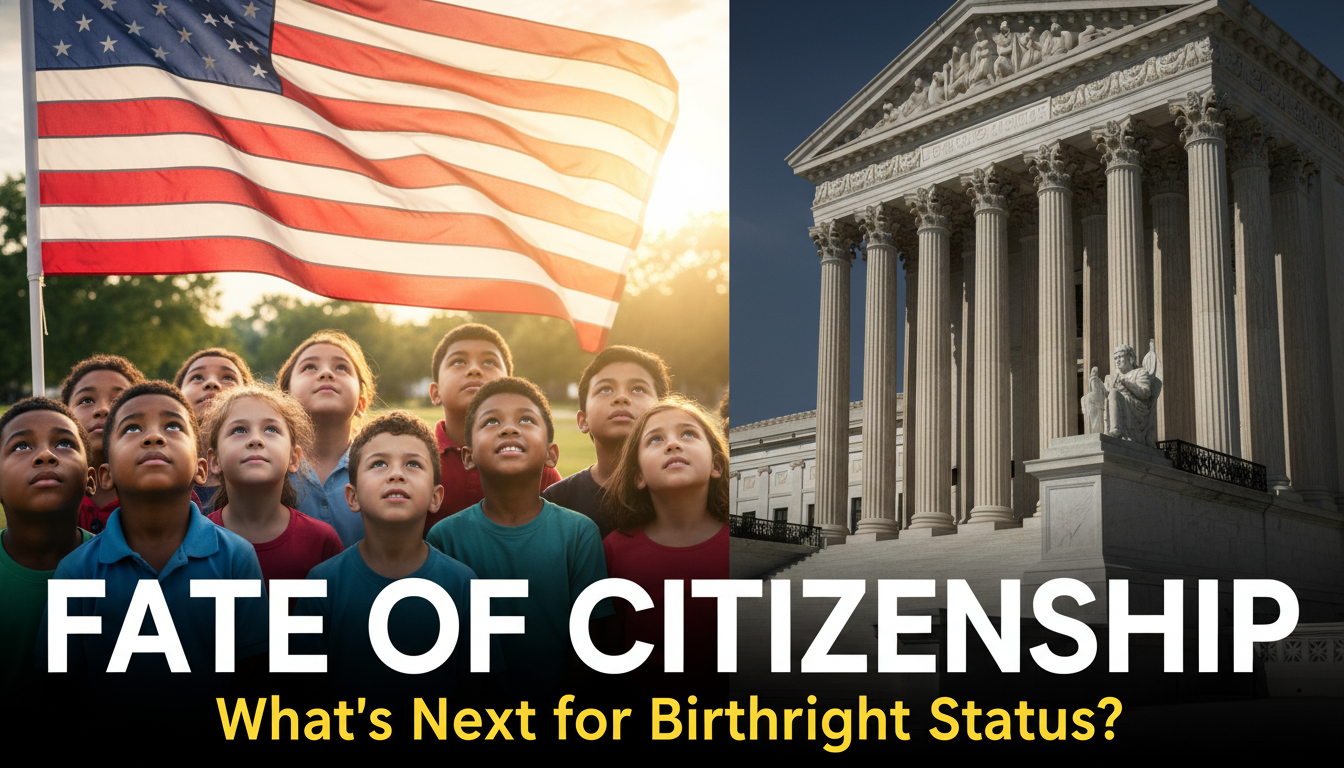
Understanding Your Birthright Status: A Key Debate
Birthright Status is a fundamental legal concept. It grants citizenship to individuals simply by virtue of being born within a nation’s territory. This principle, known as jus soli, has deep roots in American law. Recently, the Supreme Court agreed to hear an appeal regarding an executive order that challenges this long-standing practice. This decision could reshape the future of citizenship in the United States. Many people wonder what this means for families and national identity.
What Exactly is Birthright Citizenship?
Birthright citizenship means that almost anyone born on U.S. soil automatically becomes a U.S. citizen. This remains true regardless of their parents’ immigration status. The Fourteenth Amendment to the Constitution guarantees this right. Ratified in 1868, its Citizenship Clause states, “All persons born or naturalized in the United States, and subject to the jurisdiction thereof, are citizens of the United States”. This constitutional provision was crucial after the Civil War. Consequently, it ensured citizenship for formerly enslaved individuals.
A Look at Historical Precedent
For over a century, courts have upheld this interpretation. A landmark Supreme Court case, United States v. Wong Kim Ark in 1898, confirmed this understanding. The ruling clarified that children born in the U.S. to non-citizen parents are indeed citizens. This precedent has shaped immigration law for generations. Furthermore, it has prevented the creation of a permanent underclass within the country.

The Current Supreme Court Challenge
President Donald Trump issued an executive order on January 20, 2025. It sought to deny automatic U.S. citizenship to children whose parents are undocumented or temporarily present. This order ignited a significant legal battle. Lower courts consistently blocked its implementation. They found it violated the Constitution and established precedent. Now, the Supreme Court will hear an appeal in Trump v. Barbara. This sets the stage for a critical constitutional showdown.
Arguments For and Against Birthright Status
Proponents of birthright citizenship emphasize its role in promoting equality and integration. They argue it prevents statelessness, ensuring all children have a national identity. It also fosters social cohesion. Critics, however, contend the phrase “subject to the jurisdiction thereof” in the 14th Amendment has been misinterpreted. They suggest it was not intended to include children of those who do not owe full allegiance to the U.S. Some argue this encourages “birth tourism”. This debate reflects broader culture war shifts concerning national identity and immigration policy.
Potential Impacts of a Ruling
Should the Supreme Court uphold the executive order, the consequences would be immense. It could lead to a two-tiered system of citizenship. This would create significant confusion for families, hospitals, and government agencies. Furthermore, it could significantly increase the number of undocumented and stateless individuals in the U.S.. Experts warn this would complicate legal and social systems for decades. Conversely, a ruling upholding birthright citizenship would reaffirm over a century of legal tradition. Keep up with the latest developments by following Trump News Today.

What to Expect Next
The Supreme Court is expected to hear arguments in spring 2026. A definitive ruling could arrive by early summer. This decision will undoubtedly have lasting implications. It will clarify the constitutional scope of birthright citizenship. Regardless of the outcome, the debate highlights profound questions about who belongs and how citizenship is defined in America. Citizens and legal experts alike await this pivotal moment.