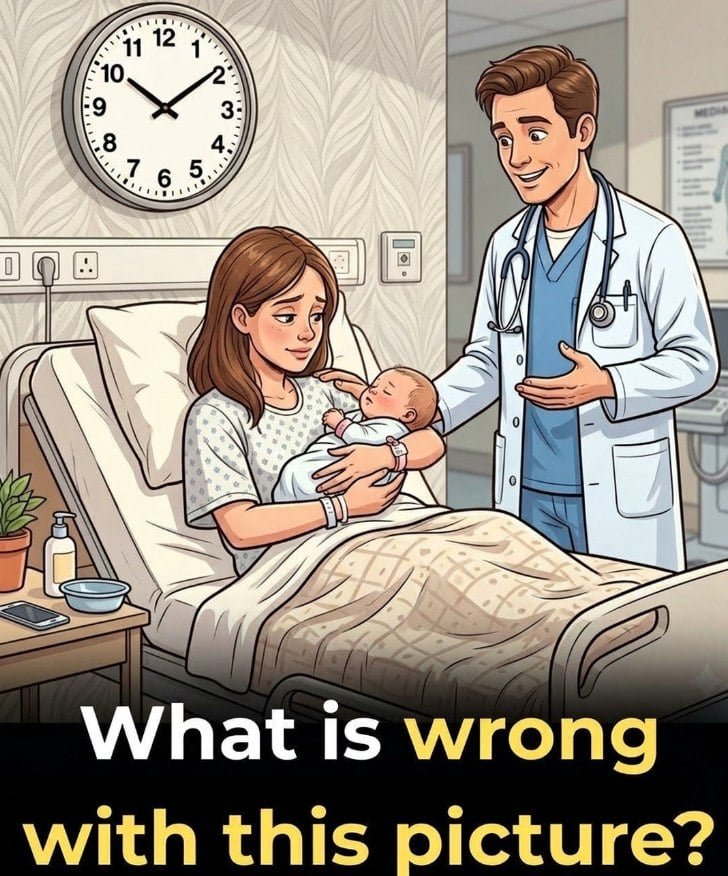
A quiet maternity room. A proud mother, a newborn in her arms, a calm doctor nearby. Everything looks perfect—until you realize something is very, very wrong. Most people stare at the photo and swear nothing is off. Then someone points it out, and you can’t unsee it. It’s hiding on the wall clock, where the number 8 should be, but instead there’s a letter B, and once your brain finally catches it, you start questioning how many other things you’ve missed in plain sig… Continues…
What makes this tiny error so unsettling is not the mistake itself, but what it reveals about the way we see. Our minds rush to label the scene: hospital, mother, baby, doctor, clock. Once the story feels complete, our attention shuts the door on anything that doesn’t fit the script. The letter “B” slips through that crack in perception, quietly replacing the “8” we assume is there.
This gap between what we expect and what we actually observe is inattentional blindness at work. Puzzles like this tug that blindfold away for a moment. They remind us that confidence in our first impression is not the same as accuracy. By training ourselves to pause, to look twice, we sharpen more than our vision. We strengthen the habit of questioning the obvious, and rediscover how much of life hides in the details we almost didn’t see.