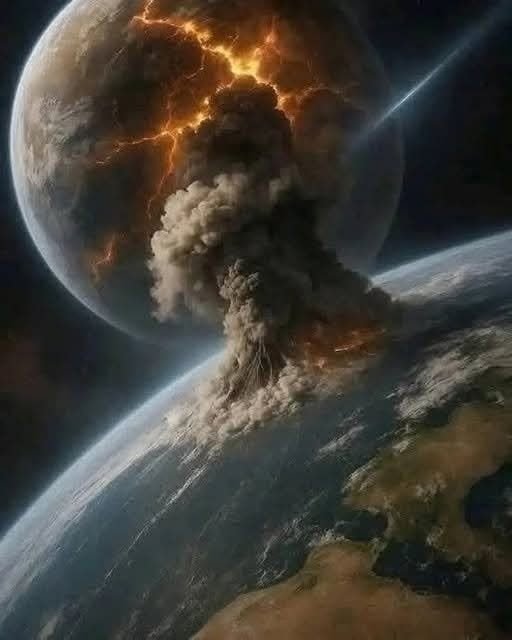
The warning didn’t sound like a warning at all. It came buried in jargon, padded with calm assurances and familiar routines. Another rock, another flyby. But then the numbers slipped out—kilometers, not meters—and the illusion cracked. A mountain-sized asteroid, officially “no threat,” silently threading past our world, close enough to rewrite everythin… Continues…
It has a name that feels more like a catalog entry than a menace: 52768 (1998 OR2). Somewhere between 1.5 and 4 kilometers wide, it drifts through the dark with indifferent precision, while on Earth, teams of scientists track its motion down to fractions of a second. Their verdict is clear: this one will miss. Its path has been checked, recalculated, and checked again. There will be no impact, no shockwave, no global night.
Yet its passage slices open an unsettling realization: our species lives at the mercy of what we can see in time to stop. Detection networks, funding cycles, political will—these are fragile shields against indifferent physics. Today, the math is comforting. Tomorrow, another object may appear on the screens, smaller, faster, closer. The question hanging over every “no danger” press release is the one we never quite answer aloud: what happens when the answer quietly changes?