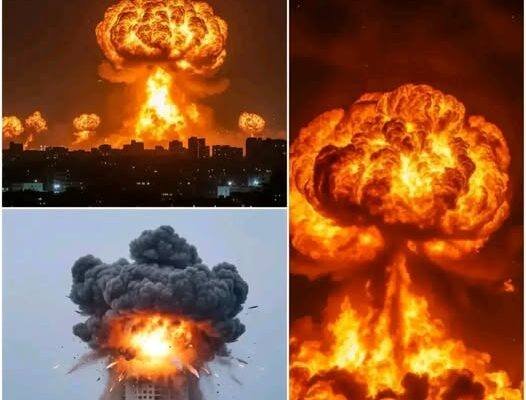
War in the Middle East is accelerating after the United States and Israel attacked Iran on Saturday, and Tehran retaliated with strikes against several of its neighbors, including US-allied Gulf states. Israel and Hezbollah are also trading blows as the conflict widens.
CNN is tracking the US-Israeli strikes across Iran, and Tehran’s retaliatory attacks on US military bases and consulates, Israel and other targets across the region.
US and Israeli military air strikes killed numerous members of the Iranian leadership, including the Supreme Leader Ayatollah Khamenei, and more strikes Tuesday targeted additional leaders.
The death toll from the conflict is growing across many countries and is now more than 1,000 in Iran.
US Defense Secretary Pete Hegseth said Wednesday: “We are just getting started,” noting that the president says to expect “larger waves” of military action.
Iran’s future leader
Khamenei’s death has plunged the Middle East into uncertainty. Senior Iranian officials have been meeting virtually to select a new supreme leader — and Khamenei’s son, Mojtaba Khamenei, is among a small handful of clerics named as likely successors. But timing is unclear.
Israel warned that any new leader would be “an unequivocal target for elimination.”
A look at some of the damage across the region
President Donald Trump told CNN’s Jake Tapper on Monday that “the biggest surprise” has been Iran’s attacks against Arab countries in the region: Bahrain, Jordan, Kuwait, Qatar and the United Arab Emirates.
Iran’s top official said Tehran “will not negotiate” with the United States, as Joint Chiefs of Staff Chairman Gen. Dan Caine said Wednesday that the US will start striking “progressively deeper” into Iran.
Trump acknowledged there could be more US casualties as the conflict escalates. At least six US service members were killed in Kuwait in a direct hit on a makeshift operations center at the civilian port of Shuaiba on Sunday morning local time, a source familiar with the situation told CNN.
The conflict has damaged air hubs, rocked densely populated areas and disrupted oil shipments.
Shipping disruptions persist in critical waterway amid strikes
The Strait of Hormuz, a narrow waterway off Iran’s southern coast, is the main shipping route for crude from oil-rich countries such as Saudi Arabia and Kuwait to the rest of the world. Iran, which controls the strait’s northern side, on Monday warned that vessels passing through the strait would be targeted, according to an adviser to the commander of Iran’s Islamic Revolutionary Guard Corps (IRGC).
About one-fifth of daily global production typically flowed through the strait before the current conflict, according to the US Energy Information Administration, which calls the channel a “critical oil chokepoint.”