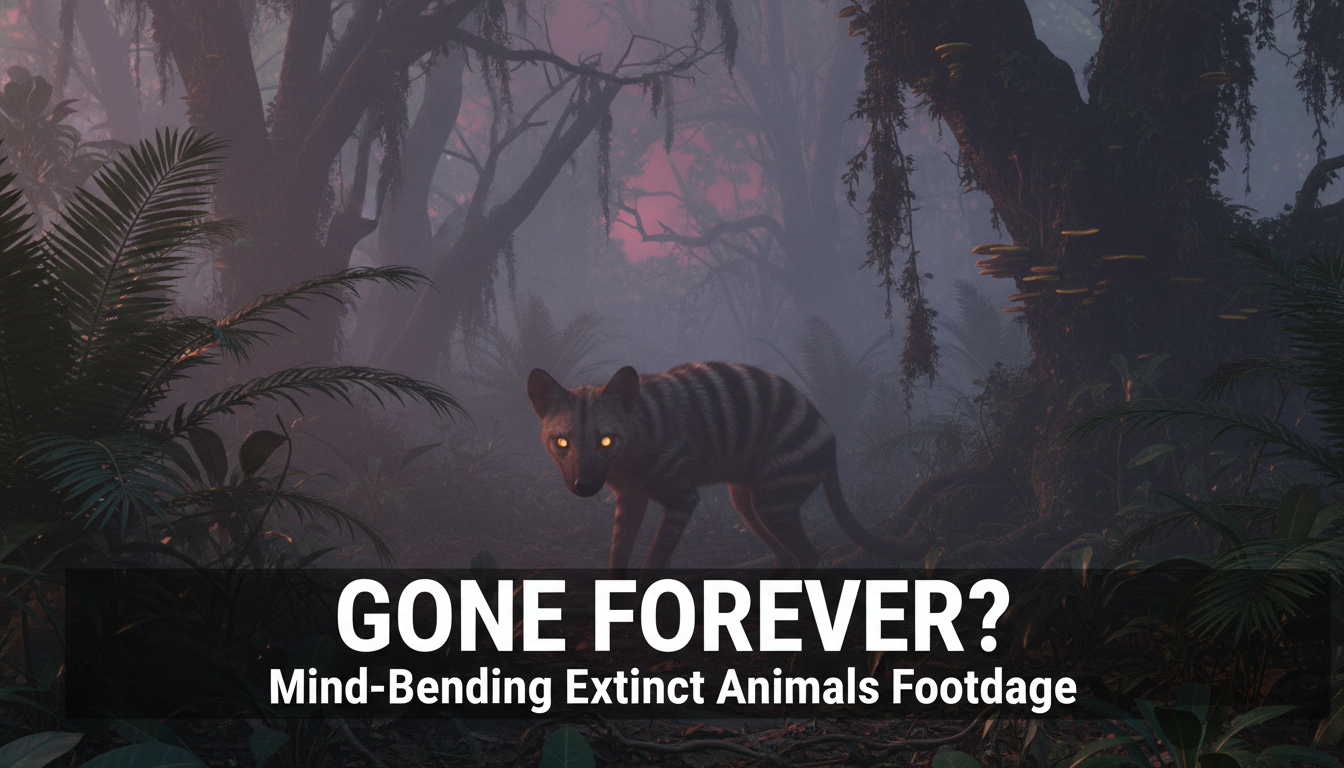
Prepare to question everything you thought you knew about the natural world. Mind-bending **extinct animals footage** is emerging, showing creatures long declared gone. Scientists and enthusiasts alike are buzzing with these unbelievable sightings. Therefore, many are asking if ‘extinct’ truly means gone forever. Indeed, this rare footage challenges our understanding of biodiversity and survival.
The Legend Lives On: Creatures from the Past
For centuries, stories have circulated about animals believed lost. Indigenous communities often recount tales of creatures explorers deemed mythical. However, recent events suggest these legends hold surprising truth. Many expeditions now capture unexpected glimpses of the ‘impossible’. Consequently, these sightings spark new hope for conservation efforts.
Shadows in the Jungle: A Glimpse of the Thylacine?
The thylacine, or Tasmanian tiger, was declared extinct in 1936. Yet, whispers and blurry videos persist from remote Australian bushlands. New **extinct animals footage** allegedly shows a striped canine-like animal. Experts are carefully analyzing these clips. Furthermore, this potential rediscovery fuels intense debate among zoologists. Could this iconic marsupial truly be making a comeback? Remember the excitement when an ‘extinct’ bird was recently found in an Amazon village? These moments redefine what we think is possible.

Further reports detail strange calls echoing through secluded valleys. Researchers deploy advanced camera traps hoping for clear evidence. The possibility of the thylacine’s survival captivates imaginations worldwide. Indeed, such an event would be a monumental biological discovery. Moreover, it would encourage further exploration in unexplored regions.
From Myth to Reality: Other Astonishing Returns
The thylacine is not alone in sparking rediscovery hopes. Other animals, like the Ivory-billed Woodpecker, have had reported sightings. This majestic bird was considered extinct for decades. Still, some claim to have seen its distinctive flight. Consequently, dedicated search parties continue their tireless work in vast wilderness areas.
Unexplained Encounters: The Coelacanth’s Legacy
Consider the coelacanth, a fish thought extinct for 65 million years. Its rediscovery in 1938 shocked the scientific community. This ‘living fossil’ proved that some species can defy expectations. Such discoveries underscore the vastness of the ocean’s mysteries. Moreover, they highlight how much we still have to learn about our planet. Learn more about the incredible history of the coelacanth on Wikipedia.

More recently, several ‘lost’ species have reappeared. From obscure frogs to tiny lizards, these comebacks offer vital lessons. Their survival often depends on undisturbed habitats. Therefore, conservation efforts become even more critical. Many individuals dedicate their lives to protecting such vulnerable creatures. Just as dedicated individuals help dogs in need, similar passion drives the search for and protection of these elusive animals.
The Science of Rediscovery: Why it Matters
The search for **extinct animals footage** is more than just a quest for viral content. It provides crucial data for conservation. Confirming a species’ existence can lead to protected status. Furthermore, it can unlock vital funding for habitat preservation. These efforts are essential for maintaining global biodiversity.
Protecting the Unseen: A Call to Action
We must recognize the importance of these findings. Every confirmed sighting contributes to a larger ecological puzzle. Protecting these ‘ghost’ species means safeguarding entire ecosystems. Consequently, supporting wildlife organizations becomes paramount. Their work directly impacts the survival of both known and unknown species.

Ultimately, the blurry videos and intriguing reports serve as powerful reminders. Our planet still holds countless secrets. The potential for rediscovery keeps hope alive for many. Indeed, the ongoing quest for clear **extinct animals footage** continues to inspire and educate. Furthermore, it reminds us of nature’s enduring power. For instance, sometimes these efforts involve exploring radical ideas like de-extinction.