
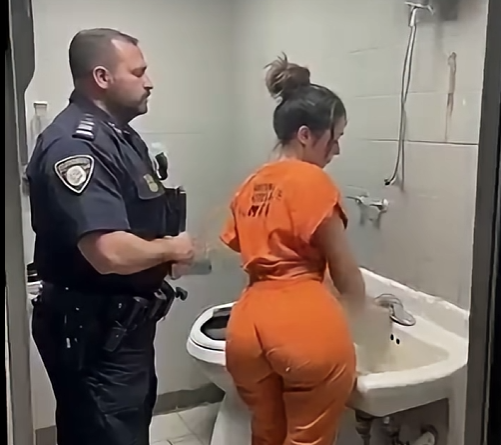
What first looked like a straightforward arrest of a police officer quickly became far more complicated after a security camera inside the station kept recording.
The officer had been led away in handcuffs as cameras rolled outside. Reporters called out questions, people nearby filmed on their phones, and many viewers formed an immediate opinion based on the public scene.
But the moment that changed the conversation did not happen in front of the crowd. It happened later, inside the station, when the officer was left in a holding area and appeared to believe no one was watching.
The Moment Caught Inside the Station
According to the footage described in reports, the officer paced the room while still in uniform before sitting down quietly. He then reached into his pocket and pulled out a small photograph.
The image was later identified by investigators as a photo of his young daughter. The officer reportedly kissed the photograph and whispered, “Tell them I was trying to protect her.”
That brief private moment shifted the tone of the story. Until then, early reports had focused on allegations that the officer interfered with an active investigation. Many people had assumed the case involved misconduct, corruption, or an abuse of authority.
Why the Footage Changed the Conversation
Once the recording began circulating online, public reaction became divided. Some viewers saw the officer’s words as a sign that the situation may have involved a personal or family-related motive. Others warned that an emotional moment should not replace evidence or the legal process.
The case also raised a familiar question in public accountability: how much should unseen context matter when someone in authority is accused of crossing a line?
Security cameras often play a major role in investigations involving public employees, law enforcement agencies, workplaces, and government buildings. Footage can clarify timelines, challenge assumptions, and preserve details that witnesses may miss. At the same time, video rarely tells the entire story without documents, testimony, and a full investigation.
The Bigger Picture
The officer’s reported statement did not settle the case. It added another layer to it.
For some, the image of a father holding a photograph made the allegations feel less simple. For others, it reinforced the need to separate sympathy from accountability, especially when an active investigation is involved.
The video spread quickly because it placed viewers in a difficult position: they were asked to consider both the humanity of the person arrested and the seriousness of the accusations against him.
At this point, the most important answers still depend on the investigation, not the viral clip. The footage may have changed how people talk about the case, but it does not replace the facts still to be established.
For now, the moment remains a reminder that what happens off-camera can change public perception, but what happens next will depend on evidence.